Why Winter Weeds Appear in Birmingham Lawns
If winter lawn weeds seem to pop up overnight across Birmingham, you are not imagining it. Our mild, seesaw winters let cool-season weeds sprout while warm-season turf naps. That is why a seasonally timed lawn fertilization and weed control program is so important for homeowners in neighborhoods from Homewood and Hoover to Trussville and Gardendale.
What Counts as Winter Lawn Weeds in Birmingham, AL?
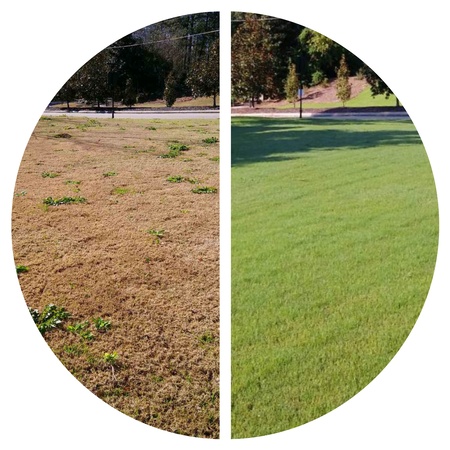
“Winter weeds” are cool-season plants that germinate in fall, sit tight through cold snaps, then surge in late winter. They stay green while Bermuda and Zoysia are dormant, so they stand out like neon patches on tan turf.
- Henbit: Square stems, scalloped leaves, and purple flowers that show up around late winter.
- Chickweed: Soft, bright green mats that spread fast in thin turf and shaded spots.
- Annual bluegrass (Poa Annua): Fine-textured, bright green clumps with lots of seedheads in early spring.
- Bittercress: Small rosette that shoots tiny seed pods when touched.
- Wild Geranium and Wild Violet: Often in moist, shady areas and beds that creep into turf.
- Burweed AKA Sticker Weed: Low-growing, fern-like foliage that stays hidden in dormant turf until sharp burrs form in late winter or early spring.
Winter weeds start in fall, not winter. Seeds wait for cooler soil and seasonal rain. By the time you notice flowers in February or March, the plants are established and already planning to reseed.
How Birmingham Weather Fuels Cool-Season Weeds
Birmingham weather swings. A cold week is often followed by a warm spell that wakes up cool-season weeds. Red clay soils hold moisture, shaded lawns stay cooler, and brief thaws let roots expand. When sunshine returns, those weeds take the light your dormant turf cannot use and run with it.
Another factor is soil compaction. High traffic around driveways, sidewalks, and play areas in places like Vestavia Hills and Mountain Brook compresses clay and squeezes out air pockets. Compacted soil favors shallow-rooted weeds over deep-rooted turf.
Shaded, compacted soil invites winter weeds. When turf is thin under oaks or on slopes, there is room for invaders. Weeds exploit every gap.
Where Winter Weeds Take Over in Your Yard

Winter weeds do not spread evenly. They follow patterns you can spot across Birmingham lawns:
- North-facing slopes and shady sides of homes where soil stays cool and damp.
- Edges along sidewalks, curbs, and driveways where heat acts as an incubator.
- Low areas that stay soggy after rain, common in neighborhoods with heavy clay or new homes with poor soil prep.
- New construction lawns where topsoil is thin and turf has not fully filled in.
These areas become green islands on dormant Bermuda. The color contrast looks like the weeds “spread overnight,” but they have been growing quietly since fall.
Why Timing Matters More Than Anything
Pre-emergent control is about timing. It creates a barrier that blocks new weed seeds from sprouting. If the application is late, seeds that already germinated can slip through. Post-emergent control then targets what is visible. The most reliable plans use both approaches in sequence so your turf is protected before and after winter weather swings.
Because germination begins in fall and continues during warm spells, the schedule is built around local soil temperature trends rather than the calendar on the wall. That is why professional programs in Birmingham include seasonally timed lawn treatment service visits.
Why You See More Weeds After Mild Winters
Mild winters do not slow cool-season weeds. They speed them up. When we skip prolonged freezes, Henbit and Chickweed keep expanding and set more seedheads. Those seeds make the next season worse. Skipping a winter treatment invites a bigger spring problem because weeds get to reseed and widen their footprint.
What Homeowners Often Notice First
Most Birmingham homeowners first spot winter weeds by look and feel, not by leaf shape. Here are early signs:
- Bright green patches in a dormant lawn, especially in shade.
- Soft mats that drag on mower wheels or leave a thatchy layer.
- Fine seedheads that dust shoes and pet paws after a short walk.
- Purple flowers that appeared fast after a warm week.
Those visual cues tell you weeds are already active. At that point, post-emergent control is needed to knock back what is visible, and the next pre-emergent needs to be on time to block the next wave.
How Professional Weed Control Protects Birmingham Lawns

A good plan in Birmingham, AL is built for warm-season turf like Bermuda and Zoysia. It layers nutrients with selective herbicides at the right times for our climate. Professionals track soil temperatures, rainfall, and microclimates, then adjust the plan so control stays consistent even when the weather changes.
When your lawn is on a schedule, it is easier to keep pressure on Henbit, Chickweed, Poa Annua, Bittercress, and Burweed before they renew from seed. The benefit you notice is steadier color and fewer patches as your warm-season turf wakes up in spring.
To see how this fits into a year-round approach, browse our local insights on the landscaping tips. You will find practical guidance on seasonal challenges specific to Birmingham yards.
Neighborhoods Across Birmingham
Every yard has its quirks. In Hoover, irrigation overspray near driveways can keep edges damp, which encourages Poa Annua. In Homewood and Crestline, tree-lined streets create long shade windows that suit Chickweed. Trussville and Leeds lawns near wooded areas often see Wild Violet pressure at lawn edges. These patterns are normal for our area, and a steady program accounts for them.
Pre-emergent must be in place before seeds sprout, and selective post-emergent follows to clean up what slipped through during a warm spell. That rhythm stays steady no matter the neighborhood.
Why Winter Weeds Stick Around Even After You Notice Them
Once winter weeds are visible, many have already rooted and begun forming the next generation of seeds. Some, like Chickweed, can reseed quickly. Others, like Poa Annua, produce many seedheads that carry into spring. That is why a single treatment is not a cure. The strategy is a sequence that blocks new sprouts and targets existing plants until the lawn thickens and shades the soil again.
Thicker turf is the long-term shield. As Bermuda and Zoysia fill in with warmer weather, they crowd out many cool-season invaders. A professional plan keeps things stable until that natural competition returns in late spring.
Putting It All Together for Your Birmingham Lawn
If you are seeing bright green islands in dormant turf, the weeds were likely seeded months ago. The right response is a schedule that matches Birmingham’s climate and soil. That includes properly timed pre-emergent, selective post-emergent, and balanced nutrition to help your lawn wake up strong.
Explore how our team lines up the calendar for local lawns inside our lawn treatment services. You will see how the visits fit together so winter weeds do not get a head start on spring.
Ready To Keep Winter Weeds Out Of Your Yard?
Start with a plan that targets winter lawn weeds in Birmingham, AL and supports your warm-season turf as it greens up. The sooner the schedule begins, the less seed returns next season.
For a tailored program that fits your lawn and neighborhood, talk with Classic Gardens & Landscape, Inc. today. Our team will set up seasonally timed visits and track progress through late winter and early spring. Get started with professional weed control or call 205-854-8001 to schedule your visit.
Start Your Lawn’s Transformation Get a Free Consultation With Our Landscaping Services In Birmingham!